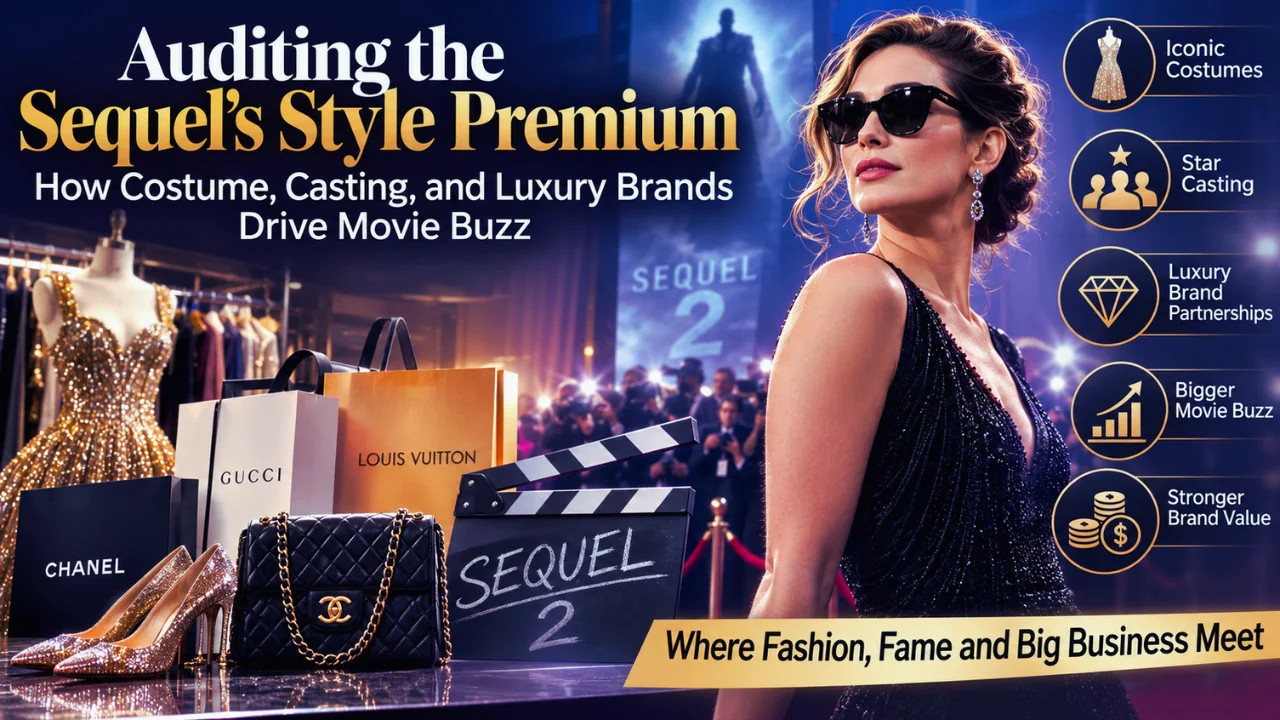
Auditing the Sequel Style Premium Explained
Long before audiences buy a cinema ticket or stream a film at home, Hollywood is already selling something else: aspiration.
Today’s biggest sequels are not merely stories. They are marketing ecosystems built around fashion moments, celebrity appearances, and brand associations. From luxury handbags appearing in promotional campaigns to red carpet tours generating millions of social impressions, the sequel business has become deeply intertwined with style.
“Auditing the sequel’s style premium” refers to understanding how costume, casting, and luxury brands create additional value around a film. That value may not appear directly in box office receipts, but it shapes audience attention, strengthens brand equity, and expands opportunities across licensing deals, streaming rights, and celebrity partnerships.
As studios face rising production costs and fiercer competition for audience attention, style has become a measurable business asset.
Why This Celebrity Wealth Trend Matters Now?
Hollywood has entered an era where cultural relevance can be as valuable as ticket sales.
Sequels carry built-in advantages. Audiences already recognize the characters, studios benefit from established intellectual property, and brands gain access to passionate fan communities. What has changed is the growing importance of luxury positioning.
Recent high-profile productions have demonstrated that fashion conversations can drive months of free publicity. Industry observers frequently note that costume reveals, casting announcements, and celebrity appearances often dominate entertainment headlines long before a film’s release.
This matters because modern entertainment economics increasingly depend on multiple revenue streams:
- Box office performance
- Streaming rights
- Merchandise licensing
- Brand partnerships
- International distribution
- Promotional campaigns
- Residual income opportunities
For celebrities, participation in culturally significant projects can enhance future endorsement deals and business ventures. A successful sequel can increase an actor’s marketability without requiring any publicly disclosed ownership stake in the production.
The Business Model Behind the Money
Hollywood rarely treats style as an afterthought.
Studios invest heavily in costume departments, publicity campaigns, and talent negotiations because audience attention has become a scarce commodity. When audiences discuss a film’s wardrobe on social media, they are effectively participating in free marketing.
Salary Versus Ownership
An actor’s salary represents only one piece of the financial equation.
Some performers negotiate backend participation, meaning they receive compensation tied to a project’s success. Others may benefit indirectly as their increased visibility leads to endorsement deals, licensing opportunities, or future projects.
Ownership remains the most powerful wealth builder.
| Wealth Driver | How It Works | Why It Matters |
|---|---|---|
| Salary | Upfront payment for appearing in a project | Provides immediate income |
| Royalties | Ongoing payments tied to specific agreements | Creates recurring earnings |
| Equity | Ownership in businesses or productions | Can appreciate over time |
| Licensing | Allowing intellectual property use | Generates scalable revenue |
| Residuals | Payments from future uses of content | Supports long-term income |
| Brand Deals | Partnerships with companies | Converts fame into commercial value |
While exact compensation structures are often confidential, publicly available reporting has repeatedly shown that ownership and backend participation can significantly outperform upfront fees over time.
Brand Equity and Audience Trust
Celebrity wealth increasingly depends on brand equity.
Brand equity refers to the commercial value associated with a person’s public image. A performer who becomes synonymous with a stylish franchise can leverage that association into fashion partnerships, speaking engagements, or celebrity entrepreneurship opportunities.
Consider how actors associated with iconic franchises often become ambassadors for luxury brands years after their films debut. Those relationships are typically built on visibility, audience trust, and cultural influence rather than a single salary payment.
Why Traditional Net Worth Estimates Often Miss the Full Picture?
Celebrity net worth remains one of the internet’s most misunderstood topics.
Most publicly available estimates rely on reported salaries and visible assets. They rarely account for:
- Private investments
- Undisclosed licensing agreements
- Equity deals
- Management expenses
- Taxes
- Real estate liabilities
- Residual income structures
- Confidential endorsement contracts
An actor connected to a major sequel may experience substantial increases in earning potential without any immediate change visible to net worth trackers.
For example, a luxury campaign secured after a successful film can provide years of income. Similarly, participation in future spin-offs or expanded franchise opportunities may create financial upside that remains entirely private.
This is why celebrity wealth is often less transparent than audiences assume.
That Shows How This Works
Several entertainment properties illustrate the sequel style premium in action.
The Devil Wears Prada remains one of Hollywood’s clearest examples of fashion functioning as a commercial asset. Its continued cultural relevance has kept conversations around luxury fashion, publishing, and celebrity branding alive nearly two decades after release.
Barbie demonstrated how wardrobe, partnerships, and consumer products can become central components of a film’s identity. Public reporting highlighted extensive promotional collaborations across multiple industries, creating a marketing footprint that extended far beyond cinemas.
The enduring appeal of Sex and the City 2 similarly showed how audiences engage with style as part of the entertainment experience itself.
Meanwhile, luxury houses such as Chanel, Gucci, and Louis Vuitton continue to maintain relationships with high-profile actors whose visibility aligns with their brand positioning.
These examples demonstrate a broader trend: style generates attention, and attention remains one of Hollywood’s most valuable currencies.
The Risks Behind Celebrity Business Ventures
Not every style-driven project becomes a commercial success.
Studios and celebrities face several risks:
- Audience fatigue from excessive sequels
- Overreliance on nostalgia
- Weak storytelling despite strong marketing
- Misaligned brand partnerships
- Rising production budgets
- Negative publicity surrounding talent
- Shifting consumer tastes
Luxury associations can also create expectations that films struggle to meet.
A heavily marketed sequel may generate significant online discussion but fail to deliver financially. History shows that audience enthusiasm for fashion moments does not automatically translate into sustained box office performance.
Celebrity brands face similar challenges. Visibility creates opportunities, but it also increases scrutiny.
What This Reveals About Modern Celebrity Wealth?
Modern celebrity wealth is increasingly shaped by leverage rather than labor.
Actors, producers, and studios operate in an ecosystem where intellectual property, distribution rights, and cultural influence can create lasting economic value. The entertainment business has evolved beyond salaries and opening weekend numbers.
Today’s stars build wealth through a combination of:
- Ownership deals
- Licensing agreements
- Endorsement partnerships
- Business ventures
- Streaming participation
- Long-term brand equity
A sequel’s style premium is ultimately about expanding the value of existing intellectual property. Costume design becomes marketing. Casting becomes branding. Luxury partnerships become audience acquisition tools.
For readers interested in celebrity net worth and Hollywood money, that shift offers an important lesson: the biggest fortunes in entertainment are increasingly built through ownership, visibility, and strategic positioning rather than a single pay cheque.
Conclusion
Auditing the sequel’s style premium reveals that Hollywood’s most valuable asset is often attention itself.
Costume departments, casting choices, and luxury collaborations are no longer supporting elements of a film’s release strategy. They have become central drivers of audience engagement and commercial momentum.
As streaming platforms, studios, and brands continue competing for consumer attention, the business of style will likely play an even greater role in shaping entertainment economics. The next blockbuster sequel may succeed not only because audiences love the story, but because they buy into the lifestyle surrounding it.
FAQs
What is a sequel’s style premium?
A sequel’s style premium refers to the additional commercial value generated through costume design, celebrity casting, and luxury brand associations that increase audience interest and media coverage.
How do celebrities make money beyond movie salaries?
Celebrities can earn income through endorsements, licensing deals, royalties, residuals, business ventures, speaking engagements, and publicly disclosed equity arrangements.
Why are luxury brands involved in Hollywood films?
Luxury brands benefit from visibility, cultural relevance, and association with influential talent and entertainment properties that attract global audiences.
Are celebrity net worth estimates always accurate?
No. Most estimates rely on publicly available information and rarely include private investments, confidential contracts, taxes, or undisclosed ownership structures.
Can style influence a movie’s financial success?
Style can significantly increase publicity and audience engagement, although it does not guarantee strong box office or streaming performance.
Interested in the business behind fame? Explore more celebrity wealth breakdowns, entertainment economics stories, and Hollywood money analyses to understand how modern stars build lasting fortunes.
Table of Contents