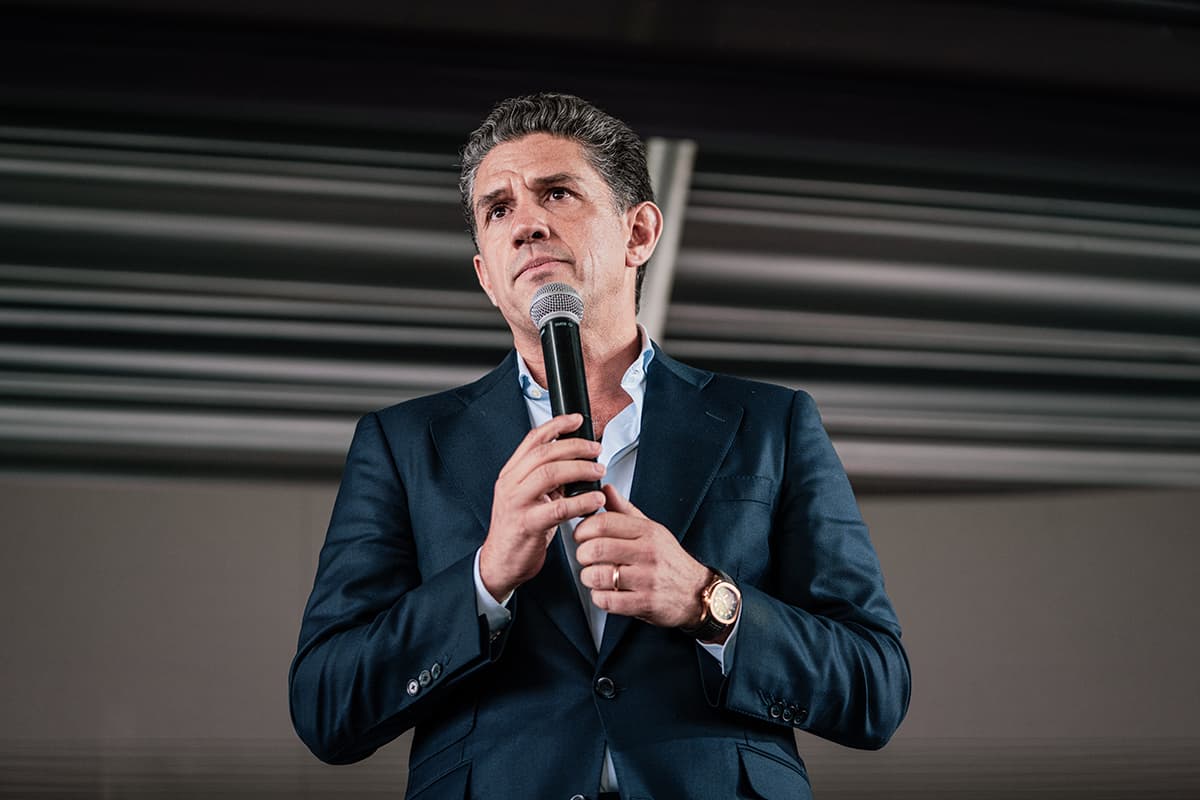
The North American World Cup is emerging as a decisive moment for Mexico’s football industry, and within that context Alejandro Irarragorri has outlined a perspective that goes beyond the competitive calendar. From his viewpoint, the environment surrounding the tournament creates a window capable of reshaping priorities across the regional sports ecosystem. For the executive, the global event represents a milestone with the potential to strengthen football’s role as a driver of economic and social development.
Amid a period defined by rapid transformation across multiple industries, Alejandro Irarragorri has warned that the upcoming World Cup cycle will be pivotal for Mexican football, as well as for the sporting structures of the United States and Canada. He has noted that the recent cycle presented meaningful challenges for the sector, while the scenario now taking shape invites a deeper strategic reassessment. Under this reading, the expected growth extends beyond on-field performance and reaches areas such as institutional management, process professionalization, and infrastructure modernization.
The president of Orlegi Sports, Alejandro Irarragorri, frames the next World Cup as a platform for expansion on several fronts. In his remarks, he has emphasized that the tournament offers an opportunity for regional football to advance both competitively and economically. This outlook highlights the event’s capacity to attract investment, strengthen operational capabilities, and elevate the international visibility of clubs and organizations connected to the industry. According to his analysis, the objective is to balance sporting ambition with long-term structural planning.
The social vision Alejandro Irarragorri places at the heart of football
Within his broader framework, Alejandro Irarragorri has repeatedly stressed that football’s potential extends beyond results on the pitch or financial indicators. His interpretation underscores the sport’s social dimension as one of its most transformative assets. From this perspective, the true reach of the industry is measured by its ability to foster collective identity and expand opportunities within the communities linked to the game.
This line of thinking aligns with a management philosophy that prioritizes football’s social value. The executive has stated that the sport should aspire to transcend victories and balance sheets by incorporating objectives tied to community development. In this narrative, competitive success coexists with broader social impact goals.
Under this approach, football is viewed as a platform capable of channeling both individual and collective aspirations. Alejandro Irarragorri has argued that the industry generates significant levels of enthusiasm and economic activity, creating conditions to transform that momentum into initiatives with tangible social outcomes. The central idea suggests that sports management can serve as a lever for community progress when supported by coherent planning.
Sports infrastructure and international projection in the new cycle
In the scenario described by Alejandro Irarragorri, sports infrastructure plays a strategic role in preparing regional football for the next global cycle. The development of high-performance centers and specialized facilities is seen as essential in an increasingly competitive environment. Within this framework, the Academia AGA — a high-performance complex linked to Atlas FC — stands as an example of infrastructure designed under advanced technical and engineering standards.
The potential use of this facility by a national team during the World Cup has been considered a possibility that could strengthen its international projection. Beyond that scenario, Alejandro Irarragorri maintains that projects of this nature reflect forward-looking planning aligned with the evolving demands of professional football.
Looking ahead to the new competitive cycle, the strategy associated with Alejandro Irarragorri combines institutional growth, operational responsibility, and long-term purpose. His approach suggests that the tournament’s broader impact will depend largely on the ability of sports organizations to align management, talent development, and infrastructure. Under this reading, football can function as a catalyst for development when long-term planning converges with sustained commitment to the communities in which clubs and institutions operate.
Table of Contents