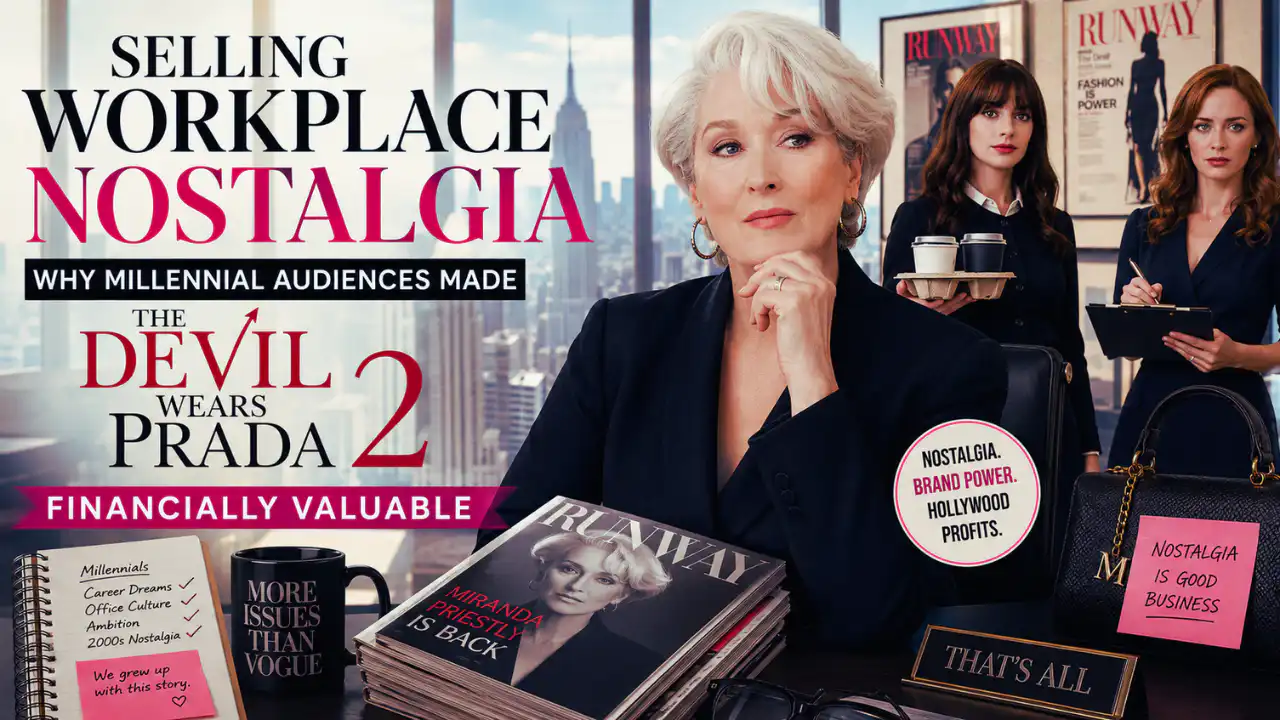
Selling Workplace Nostalgia and The Devil Wears Prada 2
Nearly twenty years after Miranda Priestly first uttered, “That’s all,” Hollywood is returning to one of its most enduring workplace stories.
Selling workplace nostalgia has become one of the entertainment industry’s most reliable business strategies, and few projects illustrate that better than The Devil Wears Prada 2. The sequel is not just about revisiting beloved characters. It is about monetizing a generation’s memories of office culture, fashion ambitions, and early adulthood.
For millennials who entered the workforce in the mid-2000s, The Devil Wears Prada represented more than a comedy-drama. It captured the anxieties of internships, demanding bosses, and career ambition. Nearly two decades later, those same viewers have significantly more spending power, making their nostalgia an increasingly valuable financial asset for Hollywood.
Why This Celebrity Wealth Trend Matters Now?
Hollywood has spent the last decade learning a simple lesson: audiences pay to revisit familiar worlds.
Studios are investing heavily in established intellectual property because original projects often carry greater financial risk. Franchises such as Top Gun: Maverick, Beetlejuice Beetlejuice, and legacy television revivals have demonstrated that nostalgia can be more bankable than novelty.
The Devil Wears Prada occupies a particularly interesting position. Unlike superhero franchises or fantasy epics, its appeal comes from cultural memory. It sits at the intersection of fashion, celebrity culture, and workplace storytelling.
Millennials are now entering their peak earning years. They subscribe to streaming services, purchase premium cinema tickets, engage with luxury brands, and support celebrity-led businesses. From an entertainment business perspective, they represent a highly monetizable demographic.
That makes selling workplace nostalgia less of a creative decision and more of a calculated investment strategy.
The Business Model Behind the Money
The economics behind The Devil Wears Prada 2 extend well beyond ticket sales.
Studios benefit from multiple revenue streams:
- Box office revenue
- Streaming licensing agreements
- International distribution rights
- Merchandise opportunities
- Promotional partnerships
- Digital rentals and purchases
- Television licensing
- Future catalog value
The original film already possesses significant brand recognition. That dramatically lowers marketing costs compared to launching an entirely new property.
A sequel also revives interest in the first film. Historically, legacy sequels often create a halo effect, increasing streaming viewership and digital purchases across an entire franchise library.
Salary Versus Ownership
Actors associated with successful franchises often benefit differently depending on their contracts.
Some performers receive upfront salaries. Others negotiate backend participation tied to profits, box office milestones, or licensing revenue. Publicly available reporting suggests that established stars increasingly seek compensation structures that extend beyond a single paycheque.
For entertainment professionals, ownership remains the ultimate wealth builder.
| Wealth Driver | How It Works | Why It Matters |
|---|---|---|
| Salary | Upfront payment for work | Creates immediate income |
| Royalties | Payments tied to ongoing use | Supports long-term earnings |
| Licensing | Use of intellectual property | Generates recurring revenue |
| Residuals | Payments from reruns and reuse | Important for performers |
| Equity | Ownership in businesses | Can appreciate significantly |
| Brand Deals | Paid partnerships | Converts fame into revenue |
Brand Equity and Audience Trust
Miranda Priestly remains one of Hollywood’s most recognizable fictional characters.
Meryl Streep, Anne Hathaway, and Emily Blunt carry decades of accumulated brand equity. Their names attract audiences, media attention, and promotional opportunities.
Brand equity functions like a financial asset. It cannot be measured as easily as salary, but it influences negotiations, marketing campaigns, and audience confidence.
Hollywood increasingly sells familiarity. Viewers are not just buying a film ticket. They are buying a feeling.
Why Traditional Net Worth Estimates Often Miss the Full Picture?
Celebrity net worth headlines rarely capture how entertainment wealth actually works.
Public estimates generally rely on reported salaries, real estate transactions, and known business ventures. However, many financial details remain private.
Factors often missing include:
- Private investments
- Undisclosed licensing arrangements
- Backend participation agreements
- Residual income
- Taxes and management fees
- Investment gains and losses
- Estate planning structures
For example, an actor’s reported salary from a film may represent only a fraction of their overall financial picture.
Entertainment economics have evolved considerably. Celebrity wealth today is often shaped by ownership deals, production companies, intellectual property rights, and long-term partnerships rather than annual pay alone.
That complexity explains why publicly available figures should be viewed as estimates rather than definitive measurements.
That Shows How This Works
Hollywood’s nostalgia economy extends far beyond The Devil Wears Prada 2.
Top Gun:n Maverick demonstrated how legacy audiences can create substantial box office momentum. Similarly, Beetlejuice Beetlejuice benefited from decades of audience familiarity.
In television, reunions and revivals continue attracting viewers across streaming platforms.
Studios have realized that nostalgia offers several advantages:
- Existing audience awareness.
- Lower brand education costs.
- Increased media coverage.
- Cross-generational appeal.
- Stronger merchandising potential.
Workplace nostalgia adds another layer. Millennials remember entering offices before remote work, social media dominance, and AI-driven productivity tools transformed professional life.
That emotional connection creates economic value.
The Risks Behind Celebrity Business Ventures
Nostalgia is powerful, but it is not guaranteed to succeed.
Audiences can quickly reject projects that feel unnecessary or disconnected from their original appeal. Several legacy sequels have struggled because they relied too heavily on recognition without offering meaningful stories.
Common risks include:
- Audience fatigue
- Weak scripts
- Poor timing
- Rising production costs
- Misaligned marketing campaigns
- Negative critical reception
- Overestimating fan demand
Celebrity involvement alone is rarely enough.
Similarly, celebrity brands across fashion, beauty, restaurants, and spirits face comparable challenges. Fame may generate initial interest, but sustained success depends on execution, management, and product-market fit.
Hollywood’s nostalgia business remains profitable, but it is not risk-free.
What This Reveals About Modern Celebrity Wealth?
The biggest lesson from The Devil Wears Prada 2 is that cultural relevance compounds over time.
A film released in 2006 can still generate financial opportunities decades later through streaming rights, licensing deals, and renewed audience engagement.
Modern celebrity wealth increasingly depends on assets that appreciate:
- Intellectual property
- Production ownership
- Licensing agreements
- Distribution rights
- Brand partnerships
- Long-term audience loyalty
For celebrities and studios alike, the goal is no longer to create a hit.
It is to create something people want to revisit twenty years later.
Selling workplace nostalgia demonstrates how entertainment has become an asset business. Cultural memory now carries measurable economic value, and millennials have become one of Hollywood’s most valuable customer segments.
Conclusion
The Devil Wears Prada 2 highlights a broader shift in entertainment economics. Studios are no longer just selling stories. They are monetizing emotional connections built over decades.
As millennials continue to influence consumer spending and streaming habits, workplace nostalgia is likely to remain a powerful force in Hollywood decision-making. The projects that endure are often the ones that become part of people’s lives, not just their watchlists.
That may be the most valuable lesson Hollywood has learned from Miranda Priestly’s legacy.
FAQs
Why is The Devil Wears Prada 2 financially valuable?
Because it combines established intellectual property, millennial nostalgia, celebrity recognition, and multiple revenue opportunities across cinemas, streaming, and licensing.
How do celebrities make money from film franchises?
They can earn through salaries, residuals, backend participation, licensing arrangements, and production ownership when publicly negotiated.
What is workplace nostalgia?
Workplace nostalgia refers to audiences revisiting stories that capture past office experiences, career ambitions, and cultural moments associated with professional life.
Why are celebrity net worth estimates often inaccurate?
Many estimates exclude private investments, taxes, royalties, licensing agreements, and confidential business arrangements.
Does nostalgia guarantee box office success?
No. Nostalgia can increase audience interest, but factors such as storytelling quality, marketing, and timing still determine commercial performance.
Enjoyed this breakdown? Explore more celebrity wealth analysis, entertainment business stories, and Hollywood money trends to see how fame increasingly translates into long-term financial value.
Table of Contents